The mature student path

When I started working as a translator, my toolkit included a French degree in English and 8 years practicing my language skills between Ireland and England. The translation opportunities I was presented with were, in my opinion, the lucky outcome of a solid network and being in the right place at the right time. Working as a part-time freelance translator, I discovered the full extent of what this profession requires, and realised that there is more to translation than language skills. It became evident to me that I needed to further my education with a training specific to translation. I chose to go back to university and study for a Master in Translation and Interpreting Studies.

Although I had no hesitation as to the necessity of this training, my situation was not a typical one. I was a ‘mature student’ of 35, with a new family (a step-son of 7), a mortgage and house renovation works on the go. None of this really seemed problematic to me however, since my resolution was infallible. Just like love, a mature student’s determination makes you blind.

Admittedly, I was blessed with a fantastic support system. My partner and step-son were ever so understanding when, in the run up to a deadline, I missed diner and lullaby appointments to pull an all-nighter at the library, or when I couldn’t partake in weekend activities because every hour was dedicated to reading journal articles. I had one year to learn everything I could (from university*) about translation, its techniques, theories, currents and advances, and considering the financial cost, this was one experience I would not get a second chance at. I worked hard, I was broke, and I was often too tired to do anything else, but there is no doubt this was one of the best experiences of my life.

From a personal stance, succeeding in my master studies was a huge confidence boost. I was a poor to average student throughout my previous education, and although I wanted to do well when I started, I did not expect the results that I achieved. I do believe that undertaking this master as a mature student, with the awareness of its necessity, a well defined career project, and the lingering underlining pressure of financial dependencies that “adults” learn to live with, gave me the focus I needed to succeed, and had clearly lacked through my earlier education.

It goes without saying that my career also benefited from this move. My office was given an update with adequate hardware and software that I discovered and learned to use during the master. This greatly improved my work in terms of efficiency and adaptability to the market, and gave me the confidence to approach new potential sources of work whose standards I could now meet. Since graduating, I was able to up my game and earn the trust of a number of new agencies and clients. I also joined networks such as the ITI and North West Translators Network, and started to plan for my continuing professional development.

During the course, I worked alongside younger students who had come to the master straight from their previous studies. On one hand, being a mature student meant that I already had some knowledge of the translation market, which helped me to put in context some of the notions covered by our lecturers. On the other hand, unlike most of my fellow students, I had left education 12 years before. As a result, I was a little out of the loop when it came to the purely academic aspects of studying, such as theoretical understanding, academic writing and the general gymnastic required to fully grasp and articulate theoretical ideas. It took me a few weeks to adapt to the rhythm of it all, but I enjoyed it from day one. I realised how much more gratifying it is to learn when you actually have a career plan and the motivation needed for it. I became an avid reader of all things to do with translation, and gave my brain a serious workout after years of relying on acquired skills.

I’m hoping it is clear by now that I am a strong supporter of going back to education as a mature student. I would actually advocate for anyone who isn’t quite sure what their calling is earlier in life to live a little before making the decision to further their education. A mature student is not only older than his/her peers, but mature enough to be determined and focused enough to make the most of their time at university. It is a challenging enterprise, especially when you have other responsibilities, but if it has been thought through and evaluated as the next logical step, then it is definitely worth the investment.

*There are many other ways to further one’s professional development.
Mature Student illustration 3

More than words

Many people seem to assume that the only requirement to become a professional translator or interpreter is to speak at least two languages fluently. For example, it is not uncommon for bilingual people to be approached by friends and colleagues casually requesting them to “just translate” this letter, email or article, assuming we acquired translation skills at the same time as we acquired multiple language skills.

This is unfortunately a big misconception.

In the same way that speaking one language does not make you a writer, speaking two languages does not make you a translator.

Translation is a profession that demands a set of skills much broader than is commonly considered. First, the translator must be able to analyse the text that is to be translated (source text) and identify its structure, its linguistic features (tone, register, grammar…) as well as its objective, or purpose. Purpose in this context refers to the effect that the original text intends to have on its audience (to sell, to entertain, to inform…). It must be retained in the translated version, or target text. The structure however is not necessarily preserved if it presents an obstacle to achieving the purpose of the source text.

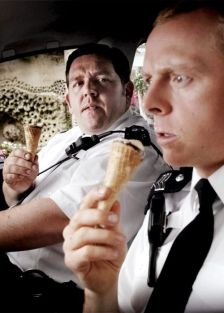
An example of this can be observed in the evolution of the Cornetto campaign studied by Carmen Millàn-Varela (2004). In the ‘Cupid’ campaign ran internationally in 1999 and 2000, the following changes were observed in the translation of the slogan:

8a3a09494cc562a2f338b696f3a6bed0

Italy, 1999:
Senza Cornetto, l’Amore non ha gusto.
[Without Cornetto, There’s no taste in Love.](Translated by Millàn-Varela.)

UK, 2000:
Cornetto. It’s a Love thing.

Portugal, 2000:
Cornetto. Derrete coraçoes.
[Cornetto. Melts hearts.]
(Translated by Millàn-Varela.)


Although the theme of Love is maintained from one language to another, the translation is not particularly faithful to the content of the source text and instead seeks equivalence in terms of effect and function. The purpose of Marketing communication is to respond to a need (or to create this need) and to sell a product. The role of the translator is to use his/her cultural knowledge of the targeted audience to reproduce this purpose, almost regardless of what the text said in the first place. This type of commercial translation is therefor also referred to as ‘transcreation’.

Another example can be found in the significant difference in structure between resumes produced in the UK and those targeting the French employment market, which are expected to synthesise and condense all required information on a well-designed single page. If the information contained in the English CV is to reach efficiently the targeted French employer, it must be completely restructured. As a result, and secondly, a strong knowledge of culture specific communication trends and an expertise in specific fields of written communication are essential to achieving a translation of quality.

It is worth noting that this required expertise is what leads professional translators to choose a small range of specialised subjects to work into. Let us again compare the work of the translator to that of the writer. The quality of a written content should stem from the specialisation and experience of its author into his/her field of expertise. For example, a commercial copywriter is unlikely to be commissioned to produce a collection of poems. He/she will be trusted, however, to know exactly how to better grasp the attention of targeted consumers. Similar considerations apply to translators. Through education, research, experience and personal interests, translators acquire specialised knowledge in the terminology, syntax, tone and register used in a few selected areas or subjects. Throughout their careers, they continuously develop and update this proficiency to consistently produce translations of cultural relevance.

Many other skills are necessary to a successful career as a translator, including IT skills to navigate the various software supporting the translator and translation agencies, a sharp attention to detail or the ability to work under pressure and according to demanding deadlines. However, it seems to me that the intricacies of translation, the skilful transfer of a text’s subtleties, connotations, nuances, humour or effect on the reader is what makes this profession so fascinating and challenging. It is what makes it a vocation, as opposed to a mere ability to speak at least two languages fluently.


References:

Millán-Varela, Carmen (2004), ‘Exploring Advertising in a Global Context: Food for thought’, The Translator, 10 (2): 245-267.


All aboard Le Char-à-banc !

I recently paid a visit to friends in Bolton and, as we got chatting about the history of the area, they told me about the traditional trips to Blackpool in “Charabancs” which took place in the early 20th century during the “wakes weeks”.

The Wakes week was originally a religious tradition which was adapted to a secular holiday during the industrial revolution. In the north west and in particular-but not exclusively- in Lancashire, where mills and factories were numerous, each town would nominate a particular week as Wake week during which all factories, mills and collieries would close and workers would indulge in a day-trip to the seaside or the peak district aboard a Charabanc.

Charabanc

I know what you’re thinking: why do we not have these anymore ?! Sure, the solid rubber tires,wooden benches and open top features coupled with the bumpy roads of the days may have numbed your backside and messed up your hair, but you’ve got to agree this is much more glamorous than a Megabus. Well, the thing is, due to the high center of gravity of the vehicle and the total absence of any health and safety measures or protection, the Charabanc was actually a pretty risky way to travel down those steep and winding roads leading to the coastal resorts. Many fatal accidents occurred, and the Charabanc was ditched…

However, Lancastrians taking a trip to Blackpool for the holidays in the 50s and 60s continued to refer to the more modern coaches as “Charabancs” (some still do).

Here’s a little taste of what it looked like…


Now, let’s look at the linguistics: this word, Charabanc, where does it come from 

From this: Le Char-à-banc. 

CharBancMegeve2

The original French char-à-banc was first introduced as a sporting vehicle in the 1840s and was also popular with hunting parties. Although it was first reserved to wealthier users, larger versions were later introduced for school and work trips as well as tourist transportation.  In 1844, the first charabanc in Britain was presented to Queen Victoria by the last French King, Louis Philippe de France (who befriended the Royal Family in Nova Scotia while sailing back from America at the end of a 21 year long exile from the French revolution…It’s a fascinating story, read all about it here.)
Louis Philippe’s Charabanc remains preserved at the Royal Mews, and in the below painting by Joseph Nash, you can see its first outing at Windsor castle.

Ooooh… Aaaah….

Windsor1844Louis-PhilippeMarie-AmélieRoyalPartyCharabancJosephNash_edited

One more thing: the word “char”, which means carriage, is still used in Quebec to informally refer to a car, although they also use “voiture” or “auto”. And if you want to informally refer to your car in France, it’s “bagnole”.

Good day !

Keep your friends close, and your “Faux Amis” closer…

Choosing a traveling partner is always a risky business. You think you know someone well, but one innocent trip to France and the friend you trusted turns into a whole different person that you, somehow, can’t relate to anymore.

Well, be prepared: languages have their own false friends (faux amis), who will reveal their true deceptive nature at the airport arrivals.

Take library for example. With its reassuring smell of old books,the piece and quiet it offers you, the good nature of its public service status…it’s decided, you’ve picked library as a travel companionYou reach France, and just as it’s ok for you to wear clothes you would never wear back home, it would seem natural for library to put on a French accent and become “Librairie”. Looking for your holiday friend and putting on your best accent, you politely ask : “où se trouve la librairie ?”. But when you get there, something has changed. The shinny new books don’t smell so good, there’s music playing, people talk at normal volume and instead of presenting a membership card, visitors are..what ? Paying ?!

That’s right, you’re in a book shop. Here in France, your beloved library is called “bibliothèque”. The mask has fallen and you are faced with the harsh truth: “Librairie” is a false friend. False friends are words that look or sound identical in both languages but have different meanings.

This is often due to the historical “borrowing” of words from one language to the other due to the fact that many various peoples occupied or shared the country at one point or another. The original meaning of the borrowed word is sometimes slightly altered by their adoptive language and, as such, may be described as lost in translation. The latin base Librarium from which both Library and Librairie originate actually means bookcase, chest for books”. But from the 16th century, in French, as well as in Spanish and Portuguese, the latin base evolved into words meaning “bookshop”. There, now you know. 

backstab1

Let’s dig a little deeper for a moment: false friends are often also called false cognates, but there is a distinction to be made. False or true friends are terms that relate to the modern meaning of words. False or true cognates refer to the etymology or origin of words. False cognates are words that are similar in their modern forms despite having different etymologies. The common misconception is to think that all false friends are false cognates. Take smoking for example. Smoking is used in French to refer to a tuxedo. It was borrowed from the English language around 1890 to designate a “vest à fumer” or “smoking-jacket” in fashion. (Because, in French, adjectives come after the noun, “smoking-jacket” was abbreviated not to “jacket” but to “smoking”). In this case, although their modern uses differ, both words originate from the same root. False friends, true cognates. Are you still with me ?

So although you have many true friends in the French language (adorable, capable, certain, final, irritable…there are thousands of them !), you will need to learn about those you can’t count on. I could try and give you a comprehensive list of all false friends you’ll need to watch out for, but I’d like you to come back. So instead I will just give you a few common ones and some I have encountered myself, often leading to utter confusion and/or hilarious misunderstandings.:

  • Actual  Actuel (=current, present)
  • Sensible  Sensible (=sensitive)
  • Money  Monnaie : (= change – you can have “money” even if you have no “monnaie”…)
  • Preservative ≠ Préservatif (= condom)
  • Tissue  Tissu : (= fabric)
  • Vest Veste (= jacket)
  • Eventually Éventuellement (= possibly, if necessary)
  • Definitely ≠ Définitivement (= definitively)

For more common false friends, you can check out this page, which also gives you a list of common “semi-false friends” (a sort of intermittent bad friend who only occasionally lets you down).

Be safe…


Bilingualism: it’s not like riding a bike


2015-05-21-1432234752-9588891-Bilingual_kid

Bilingualism is defined as the ability to use two languages with equal or nearly equal fluency. A common example is that of a child who grows up in a bilingual setting, where both parents speak a different language for example, or if the language spoken by the parents is not that of the community they live in. However if there is a change in this setting and the child doesn’t get to regularly practice both languages anymore, this bilingual ability may be lost. The child may still remember the absent language, but he/she isn’t using it fluently anymore (you’re either bilingual or you’re not basically).

I didn’t grow up in a bilingual setting. My mother spent a year in Bolton as an au-pair when she was 18, and was later able to practice her English in her workplace when dealing with foreign customers. As a result, and to my absolute amazement, she was able to translate a few words from the songs we heard on the radio. I would listen to her translate sounds that made no sense to me into beautiful lyrics about Love, pain, life…and would dream about one day being able to acquire such miraculous skills. To this day I am still fascinated by the connexions my brain is able to make when switching from one language to the other.

But it’s not that simple. I have been practicing both French and English for about 15 years now, and I do feel equally at ease in both languages, but it takes some work to maintain this bilingual level. As I live in the UK, it is my mother tongue that requires some conscious work out. I know this may seem surprising, but acquiring a language to a fluent level is not like learning how to ride a bike. In the past, after long periods of time without being able to go “home”, I would invariably be the subject of my family’s jokes (they’re lovely really !): I would find myself unable to find my words in French, or use English words in place of similar French ones (those dreaded “Faux Amis”!) or even form my sentences around the English grammar. I quickly realised I could not take my mother tongue for granted, and started to give my French a regular trip to the gym.

In an effort to increase my exposure to the French language, I introduced my British friends to French cinema, I began to watch the daily news online in French, I read a French book for each English one, I read French papers with my morning French coffee and French croissant…(yes, eating French makes me feel more French, it’s all part of the process, leave my croissant alone). The results were quick to come: no hesitation, a lot less tip-of-the-tongue frustrations, and a much faster acclimatisation on my trips back to France.

They still joke about me though, must figure out why…


Fruit cake

Now, everybody knows that 5 fruits and veg a day are the staple of a healthy diet, but do you know your five fruit idioms ? Here’s a few of them to get you started:

Couper la poire en deux: (Literally: To cut the pear in two) = To meet halfway

Se fendre la poire/pêche: (Literally: to slice one’s pear/peach)= To laugh one’s head off

Etre bonne poire/pomme: (Literally: To be a good pear/apple) = To be naive 

Tomber dans les pommes: (Literally: to fall in the apples) = To faint/pass out

Avoir la pêche: (Literally: To have the peach) = To be in great form

Avoir la banane: (Literally: To have the banana) = To have a big smile on one’s face

Travailler pour des prunes : (Literally: to work for prunes) = To get nothing for one’s work

You can find more fruit and veg related idioms on the below pages if you wish to dig further.

Go bananas !

In French: 

http://www.icem-pedagogie-freinet.org/book/export/html/3209

In English:

50 Idioms About Fruits and Vegetables

Pack up the grammar…

I have always enjoyed observing how languages borrow from each other. Languages are ever changing tools that reflect our multicultural societies, and that, to me, is a good thing.

Sometimes though, these adopted words get altered in the process: the day I realised, as a teenager, that my fellow French people and I were using the conjugated verb “parking” as a noun for a car park, I felt a little silly. I felt almost embarrassed, actually, that we had borrowed this word only to misuse it. I hear you, it’s only a small error, and it gets the point across regardless, but I can’t help feeling a little rude when I use it…

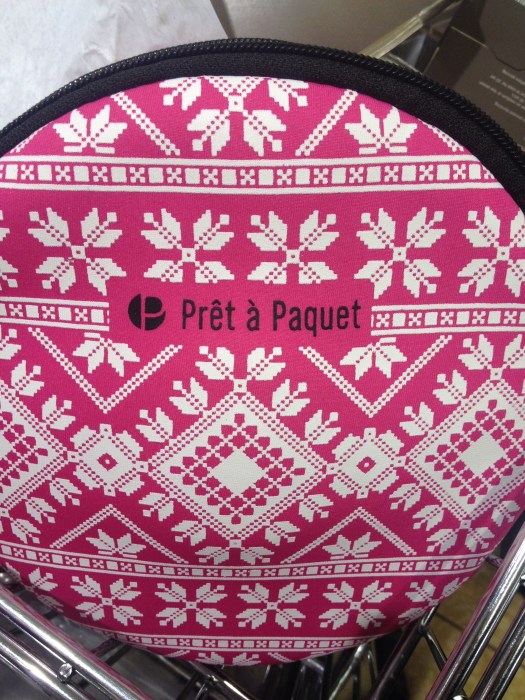
However, I felt the balance was restored when, while on a shopping trip, I spotted this little marketing gem:

IMG_3484

You might not be able to tell from the picture, but this is a toiletry bag. See what they did ? Following the footsteps of Pret-a-Manger (who ditched the accents alltogether by the way, but that’s another issue…), this is a beautiful literal translation of “ready to pack” to a more, how do you say, glamorous French version. Except it isn’t. Paquet is a noun, which means “Package” or “Parcel”. So this to me reads as “Ready to package”. It’s not so oh la la anymore.

A lot of Marketing campaigns use slogans or titles translated to French, Italian or Spanish amongst others to give their products a more continental feel. But it sometimes seems as though the accuracy of these translations is not at all as important as the exoticism gained from a foreign name.

This marketing move does not take into consideration that millions of people out here actually speak the lingo, whether it’s a native or acquired language, and many others are learning it…wrong, thanks to this kind of faux pas. As a linguist, my main feeling is exasperation. And an exasperated customer is not a buying customer.

And this, ladies and gents, is why you should ALWAYS ask a translator to do the job, because it’s a job, and ditch google translate for good, especially when marketing a product. Don’t say you haven’t been warned…